February 20, 2011

Voronoi Diagrams

This diagram does not only look good, it also make a lot of sense in various contexts. The idea behind this diagram is the division of a space into smaller regions defined by points inside that space. The division is made by borderlines that have the smallest distance to the points. 

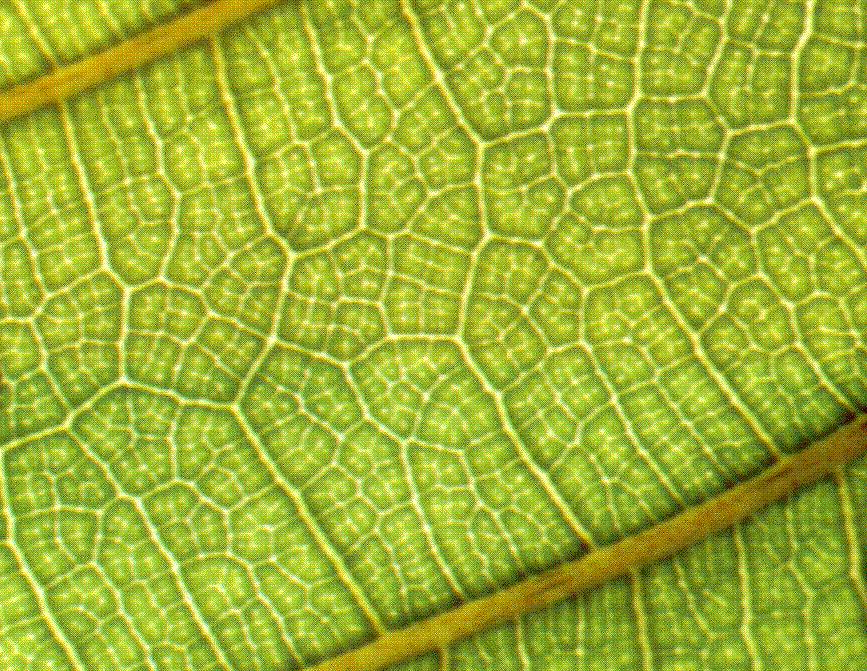
Leaf detail, via physics.utoronto.ca

Construction of voronoi diagrams (via http://www.pushpullbar.com)


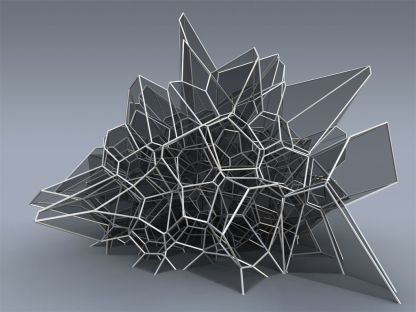
Voronoi diagrams can occur in 2 and 3-dimensional spaces. So it´s possible to get 3dimensional structures based on a voronoi diagram, which I found a pretty amazing idea. Some examples:

via math.berkeley.edu

3d voronoi (via qhull.org)


The Japanese Metabolists

 Nakagin Capsule Tower (wikipedia.org)

Kisho Kurokawa Helix City (Floating City), via www.fgautron.com

In 1959, a group of architects came together to form the new movement called "Metabolists". Their subjects were the city in its urban context, the city in the upcoming mass societies, and creating architectural structures for people in these environments. The habitat should then be flexible and extendable to huge scales.
They understood architecture as a way to fulfill the needs of people in that changing society whose laws should be built on new laws of space instead of the old ones: form and function.
In light of this, totally new and modular architectural structures were created.

City in the air (via workjes.wordpress.com)

Archigram

„You can roll out steel – any length. You can blow up a balloon – any size. You can mould plastic – any shape. Blokes that built the Forth Bridge – they didn’t worry.” (David Greene)


What may have seemed like an inaccessible future for people in the 60s, has become reality- at least theoretically. The Archigram was an architectural movement initiated by a group of british Architecture students in the years 60-74 of the last century, and shows incredible futuristic work. They were frustrated about architecture at that time, so they created something totally new. Key characteristics are modularity, living space, community, futurism. 

The movement started with an exhibition and a magazine they printed on the cheapest paper available and sold it for 9 pence each. There were 6 architects (Warren Chalk, Peter Cook, Dennis Crompton, David Greene, Ron Herron, Michael Webb), and their creations must have been mindblowing at that time, but it was a time of radical changes in general: soviets had sent the first man to space, the Beatles released their first single "Love me do", Bob Dylan became popular, and there were radical technological novelties. 


Walking City (via tangentialvignettes.blogspot.com)

Plug-In-City (via essential-architecture.com)

Instant city (via popemup.de)

Reyner Banham: Megastructure (1976)


Someone else always has had your thoughts before, always. This was what came to my mind when reading about this book. Modular structures have such a strong affection to me at the moment, that I just cannot resist to read about them all.the.time. Well, they appear everywhere, and once you have begun to think about them, you cannot NOT see them in everything, everywhere.
The finest structures are made out of modules, which means, they are similar or equal, and they are a kind of holistic thing when put together, which means they form a new structure with new functions and new appearance, while still being each one singular for itself. 
What is so compelling to me, is the fact, that they can be extended without any limits. There is no visual, no logical border for their combinations, which is something I like, I cannot tell why. Imagine a modular structure that you build and you keep putting the modules together, and you have always more modules, and you keep building and building and.....
Cool.

January 21, 2011

Work in Progress...


The construction is now made out of several modules, which can be extended to any thinkable scale. The module itself is shaped as a dodecahedron, a platonic solid that embodies stability and is extremely efficient at the same time. There are so many things to say about the dodecahedron, it appears in various fields, in mathematics, science, biology,....I´ve written about it before and will surely write some more!
So, the dodecahedron will from now on be refered to only as "dc".
The basic module has the form of a dc, and can be extended to more bigger and complex structures. There are no limits to this, as it can be continued depending on its environment. It is even thinkable to have structures underwater, in the desert, on rocks, in the forest adapted to trees....


Each dc-module is sized to fit one person, there are two floors for living, sleeping and cooking. As a complex it can form a hotel, a student residence, a science lab, or anything you can think of that needs several individual spaces. But even if you only add some modules, it could create living space for a small community or a family. 

Harmonices Mundi, or: Scientists were not only scientists once


„Die Geometrie ist einzig und ewig, ein Widerschein aus dem Geiste Gottes. Dass die Menschen an ihr teilhaben, ist mit eine Ursache dafür, dass der Mensch ein Ebenbild Gottes ist.“
– Dissertatio cum Nuntio Siderio, zit. n. M. Caspar: J. K. (1995), S. 106

"The dodecahedron is left for the celestial body, having the same number of faces as the Zodiac has signs. It can be shown that it has the greatest volume of all the figures, just as the heaven encloses everything else."
  –  The Harmony of the World, Johannes Kepler, 1619

December 19, 2010

Polyhedral forms in fishes!

How funny is this: Scientists have looked at exotic fishes a bit more exactly, and guess which structures they found then. Polyeders, of course. What else!

Scrawled cowfish

Humpback turretfish
Irreagular pentagons can be found in the scrawled cowfish and humpback turretfish.
Read the full article here: http://precedings.nature.com/documents/2191/version/1/files/npre20082191-1.pdf